Blackjack Side Bets Explained: Perfect Pairs, 21+3, Insurance
Slots, tables & live gamesBy CanadaCasinos editorial teamUpdated 19+ · how we rate
Blackjack side bets are optional wagers placed next to your main bet that pay on a specific event: a pair, a poker hand, a dealer bust or a dealer blackjack. They pay more than even money, but they usually carry a higher house edge than the main hand played with basic strategy. Insurance is a separate side bet, not protection for your hand.
In this guide
What counts as a side bet
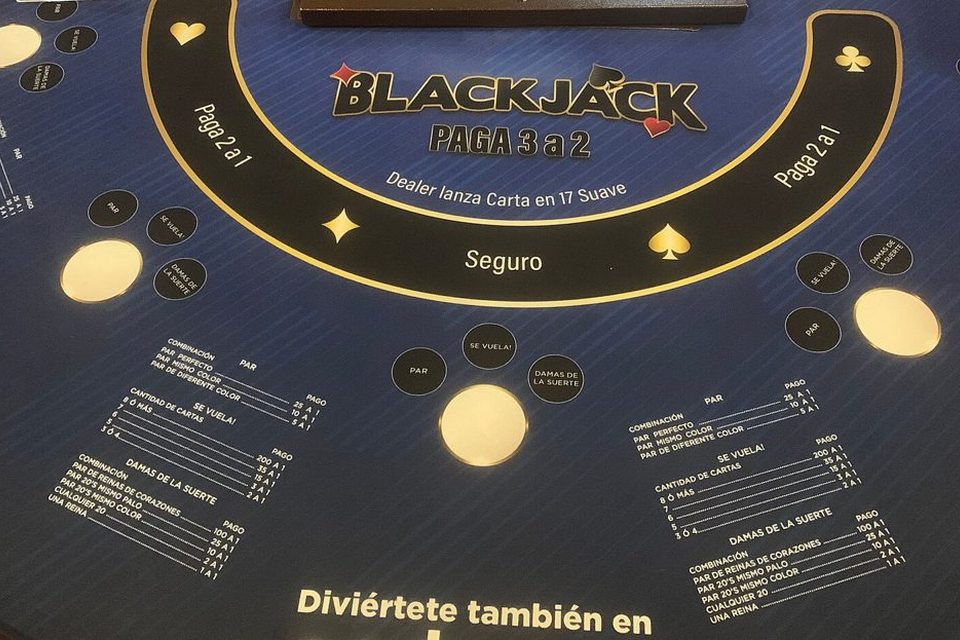
A side bet sits in its own circle or box on the layout and is settled independently of your hand. You can win the main hand and lose the side bet, or the reverse. Your strategy decisions (hit, stand, double, split) have no effect on most side bets, because they are decided by the first cards dealt.
That independence is the whole point of understanding them. The main hand in blackjack is one of the few casino games where your choices reduce the house edge; basic strategy exists for that reason. A side bet removes the choices, leaving a pure bet on the cards with a paytable set by the game designer.
How the common side bets pay
Perfect Pairs
Wins if your first two cards are a pair. Most paytables have three tiers: a mixed pair (same rank, one red and one black), a coloured pair (same rank and colour, different suits) and a perfect pair (identical cards, possible only with more than one deck). The perfect pair pays most; the mixed pair pays least.
21+3
Combines your two cards with the dealer's up card to make a three-card poker hand. A flush, straight, three of a kind, straight flush or suited three of a kind can win. Some tables pay one flat amount for any qualifying hand; others pay a tiered table, with suited trips at the top.
Bust It and similar
Pays if the dealer busts, often with a higher payout the more cards the dealer draws before busting. Some versions pay extra if the dealer busts holding particular cards.
Insurance
Offered only when the dealer shows an ace. You may stake up to half your main bet; it pays 2 to 1 if the dealer has blackjack and loses otherwise. Your main hand is settled separately.
| Side bet | Wins when | Paytable style | Decided by |
|---|---|---|---|
| Perfect Pairs | Your first two cards form a pair | Tiered: mixed, coloured, perfect | Your two cards |
| 21+3 | Your two cards plus dealer up card make a poker hand | Flat or tiered by hand rank | Three cards |
| Bust It | The dealer busts | Tiered by number of cards in the bust | Dealer's full hand |
| Insurance | Dealer's ace becomes a blackjack | Fixed 2 to 1 | Dealer's hole card |
⇄ Scroll the table sideways
Why side bets usually cost more
The main hand with basic strategy gives the house a small edge because you can react to the cards. A side bet is priced the way a slot or a roulette bet is priced: the paytable pays a little less than the true odds of each outcome. The bigger and rarer the top prize, the easier it is for that gap to stay hidden.
Take Perfect Pairs as illustrative reasoning. Pairs are not rare, so the mixed-pair tier feels like it lands often. But most two-card hands are not pairs at all, and every one of those loses the whole side stake. Spread over many hands, the occasional large payout for a perfect pair does not make up for the steady losses.
Exact house edges depend on the paytable and the number of decks, which is why two tables with the same side bet name can be priced quite differently. A small change, such as cutting the coloured-pair payout by a couple of units, can noticeably raise the cost. Treat the side bet name as a family of bets, not a single fixed product.
There is also a pacing effect. Side bets are settled on every hand, quickly. If you add one to each hand, you increase the total amount you wager per hour by the side stake, and with it the expected cost of your session.
Why insurance is a separate bet
The word "insurance" suggests you are protecting your hand. You are not. You are betting that the dealer's hole card is a ten-value card. If it is, the insurance wins 2 to 1 and your main bet usually loses; if not, the insurance loses and your hand plays on.
For a 2 to 1 payout to break even, a ten-value card would need to turn up at least one time in three. Here is the arithmetic for a six-deck shoe: it holds 312 cards, of which 96 are tens, jacks, queens or kings. With the dealer's ace out of the shoe, 96 of the remaining 311 cards are ten-value, a little under 31%. That is short of the one-in-three needed, so insurance loses money over time for a player who is not tracking the cards, even when holding a strong hand such as 20.
"Even money", offered when you hold blackjack against an ace, is the same bet wearing a different label. Taking it locks in a 1 to 1 payout instead of the usual 3 to 2, and the maths of the underlying insurance bet does not change.
How to read the paytable on a live or RNG table
On online tables the side bet rules are in the help or i panel, often with an RTP figure for each bet. On a live table the help screen usually lists payouts, deck count and the theoretical return of the main game and each side bet. Look for four things:
- Payout format. "25:1" means you receive 25 units plus your stake back; "25 for 1" means 25 units including your stake. The second is worth one unit less.
- Number of decks. It changes the odds of pairs and suited hands, and some top prizes are impossible with one deck.
- Stated RTP. If the provider publishes one, compare it with the main game's figure on the same screen.
- Minimum and maximum side stake. Side bet limits are usually lower than the main bet limits.
RNG tables and live tables can differ even when they carry the same game name. An RNG version usually reshuffles after every hand, while a live shoe is dealt down to a cut card, so the composition of the remaining cards changes from hand to hand. That does not make side bets on a live table cheaper for a casual player, but it is one reason the published figures for the two formats are not always identical. Read the help panel of each format separately rather than assuming one copies the other.
For more on main-game tables, see our guides to live blackjack in Canada and real-money blackjack sites.
Side bet checklist
- Learn basic strategy for the main hand first; that is where your decisions matter.
- Decline insurance and even money unless you are deliberately tracking cards.
- Compare paytables between tables offering the same side bet name.
- Budget side bets as entertainment spend in C$ per hour, not as a way to recover losses.
- Check whether side bets count towards bonus wagering; many terms exclude them. Our casino bonus offers guide explains contribution rules.
Questions players ask
Is Perfect Pairs ever worth playing?
Over a long run it costs more per hand than the main game with basic strategy, so it is not a money-making choice. Some players accept that cost for the chance of a larger payout. If you play it, choose the table with the best paytable and keep the side stake small.
Does taking insurance change how my hand is played?
No. Insurance is settled on its own as soon as the dealer checks for blackjack. If the dealer does not have it, your insurance stake is lost and you play your hand exactly as you would have otherwise.
Are side bet rules the same at every online casino?
No. The same name can come with different paytables, deck counts and limits depending on the provider and the version a casino licenses. Always open the help panel on the specific table, because a lower payout for one hand can noticeably raise the cost of the bet.
More from the blog
Casino Demo Mode vs Real Money: Does Free Play Match the Real Game?
Free-play demos let you try a game without staking money, but they are not a perfect preview. This guide covers RNG, RTP settings, features, login requirements and the habits a demo balance can quietly teach you.
Same Slot, Different RTP: How to Find the Version Your Casino Runs
One slot title can exist in several return-to-player versions, and the casino chooses which one you get. Here is where to find the figure the game is actually running and what a two-point gap means over a few thousand spins.
Must-Drop Jackpots Explained: Caps, Timers and Eligibility Rules
Must-drop jackpots promise to pay before a set amount or a set time. That guarantee changes the maths as the cap gets close, but minimum bets, eligible games and pool rules decide whether your spin can win at all.